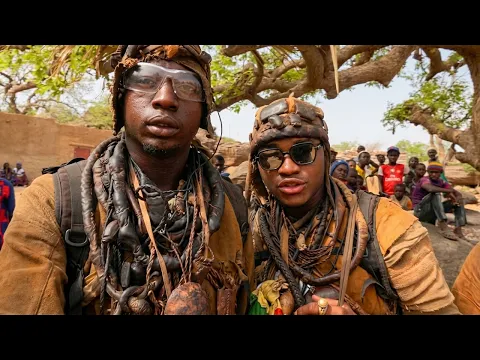
Jihad in the Sahel
An analytical journey through the Sahel examines the expansion of armed groups since 2013 and the political, economic and human forces driving a major regional crisis.
Best Documentary223 reviewed documentaries · Free to watchUnderstand conflict through testimony, local history and the conditions that sustain instability. Sensitive events are framed for documentary and educational value without endorsing violent actors.
An analytical journey through the Sahel examines the expansion of armed groups since 2013 and the political, economic and human forces driving a major regional crisis.
Best Documentary
Explain why the United States uses the Electoral College, how it shapes campaigns and why its relationship with the popular vote remains contested.
PBS
Gaddafi - 42 years in power. A nation rich in oil. A regime that seemed impossible to overthrow. From Libya's growing oil wealth to international sanctions, political repression, and the 2011 uprising, discover the remarkable rise and violent downfall of Muammar Gaddafi. This documentary explores the relationship between wealth, political power, foreign intervention, and the dramatic collapse of one of the world's longest-ruling authoritarian regimes. Gaddafi | Oil, Power and the Fall of a Dictator (2026) Director: Nick Randall Writers: Not publicly confirmed Stars: Bob Taylor (Narrator); Muammar Gaddafi (archival footage) Genre: Documentary, History, Politics, Geopolitics, War Country: United Kingdom Language: English Release Date: 2026 (exact date not confirmed) Filming Location: Not publicly confirmed. The documentary features events and archival material from Libya and other international locations. Production Company: Entertain Me Productions Synopsis: For 42 years, Muammar Gaddafi ruled Libya, transforming a young North African republic into an oil-rich state governed by an authoritarian political system. Born into a poor Bedouin family, Gaddafi rose through the military ranks before leading the 1969 coup that overthrew King Idris. With access to
Moconomy
The hidden cost of war: British soldiers return from Iraq and Afghanistan only to face battles with trauma, PTSD, and the struggle to adapt to civilian life. This powerful Dispatches investigation uncovers the emotional and psychological toll that military service in Iraq and Afghanistan has taken on British veterans and their families. Through raw interviews and intimate family moments, the documentary reveals how men like Dave Forshaw, Martin Lindley, Danny, and Jason Wilkinson faced not only the horrors of combat but also the invisible wounds of post-traumatic stress disorder (PTSD), anxiety, and depression upon returning home. Many struggle in silence, grappling with feelings of isolation, paranoia, and survivor’s guilt, often without adequate mental health support from the institutions they served. The film explores how inadequate aftercare, societal stigma, and a lack of understanding about mental health contribute to tragic outcomes, including suicide and encounters with the criminal justice system. Families share heartbreaking stories of loss, frustration, and unanswered questions, painting a vivid picture of the long-term impact of war that extends far beyond the battlefield. With firsthand accounts from soldiers
Real Stories
History is usually written on the battlefield, but the absolute most fascinating victories are fought in the shadows with whispers, fake armies, and stolen secrets. Throughout the bloodiest century on record, leaders realized that outsmarting an enemy was far more effective than outgunning them. This documentary explores the incredible true stories of military masterminds who used wild deceptions and impossible guerrilla tactics to change the world. From Winston Churchill dropping decoy bodies into the Mediterranean to fool Nazi Germany, to the tense standoff of the Cuban Missile Crisis that brought the planet to the brink of nuclear ruin, these are the hidden maneuvers that shaped modern society. We look closely at how phantom tanks, strategic lies, and tiny revolutionary forces managed to topple empires and outwit the greatest superpowers. Whether it is the secret rise of Fidel Castro or the mind games played by George Patton, the truth behind these conflicts is far stranger than anything you read in a textbook. 💚 Join the Absolute History club to get access to exclusive member benefits! 📺 You can now become a
Absolute History
Discover unpublished and rarely seen photographs from the Battle of Berlin in 1945, brought together in an exclusive collection for history enthusiasts. More than 200 historical photographs take you through the final days of the Third Reich and reveal scenes rarely shown in documentaries. What did the main Nazi leaders say when they realized their fate was sealed? During the historic Nuremberg trials, the men who had held the most powerful positions in the Third Reich found themselves facing a completely different reality: they no longer had armies, authority, or any ability to escape justice. Amidst that setting, American psychiatrist Douglas Kelley gained access to several of the main defendants, holding conversations and conducting psychological evaluations that provided insight into aspects of their personality, their thoughts, and their reactions to defeat. Through interviews, clinical observations, and psychological tests, Kelley attempted to understand how these men had participated in a regime responsible for crimes of extraordinary magnitude. Among the prisoners he examined were Hermann Göring, Rudolf Hess, and other high-ranking Nazi officials. Their conversations revealed differing attitudes toward responsibility, ranging from
Der Kommandant English
Discover unpublished and rarely seen photographs from the Battle of Berlin in 1945, brought together in an exclusive collection for history enthusiasts. More than 200 historical photographs take you through the final days of the Third Reich and reveal scenes rarely shown in documentaries. Before becoming the dictator who would ignite World War II in Europe, Adolf Hitler was a young soldier who served in the German army during World War I. Known for his rank of corporal, his experience in the trenches, the harsh conditions at the front, and Germany's defeat in 1918 profoundly shaped his trajectory. But who was Hitler really before reaching power? How did he go from being a practically unknown soldier to one of the most destructive figures in history? In this comprehensive historical documentary, we explore the early years of Adolf Hitler, from his childhood in Austria and artistic aspirations to his arrival in Munich and participation in World War I. We analyze his life as a military runner, the decorations he received, and the political and social context surrounding his radicalization. We will
Der Kommandant English
A WWII Fighter Plane Found Underwater | Hunting Nazi Treasure | Season 1 Episode 2 The mystery of Rommel's Gold takes investigators on a journey across continents to uncover the fate of 50 kilograms of gold stolen by the Nazis from Tunisia's Jewish community during World War II. Following the trail of notorious SS officer Walter Rauff, the team investigates secret wartime documents, a possible underwater treasure site off Corsica, and evidence linking stolen riches to Nazi escape networks. From Tunisia and Germany to Corsica and Chile, this gripping historical investigation explores one of World War II's most enduring missing treasure mysteries. Explore the hidden history of World War II as investigators follow the trail of priceless treasures, stolen artworks, and cultural artifacts lost during the conflict. Through historical archives, eyewitness accounts, secret locations, and modern investigations, each episode uncovers new clues about the fate of these missing objects. Discover how wartime looting affected countless families and why the search for their stolen heritage continues decades later. This documentary series brings forgotten stories to light while exploring the mysteries, discoveries
Banijay History
In the final 100 days of World War II in Europe, Nazi Germany collapses under the Allied advance from January to May 1945. Soviet troops push toward Berlin while American, British and Canadian forces cross the Rhine. The documentary follows the sinking of the Wilhelm Gustloff, the bombing of Dresden, Hitler's last propaganda campaigns, and the liberation of Nazi concentration camps. From the Battle of the Seelow Heights and the desperate defense of Berlin to Hitler's suicide in the Führerbunker, witness the final downfall of the Third Reich. Archival footage, eyewitness accounts and historians reveal the terror of mass evacuations, the Holocaust's final atrocities, the rival strategies of Stalin, Churchill and Eisenhower, and the struggle to survive. After Hitler's death on April 30, Karl Dönitz's government negotiates Germany's unconditional surrender, ending the war in Europe on May 8, 1945. -- Welcome to the official Get.factual the original video platform channel! 🌍 We are a documentary streaming channel covering history, science, technology, and nature. Explore worlds distant, forgotten, and unknown; from the depths of ocean trenches to the far reaches of
Get.factual
Discover unpublished and rarely seen photographs from the Battle of Berlin in 1945, brought together in an exclusive collection for history enthusiasts. More than 200 historical photographs take you through the final days of the Third Reich and reveal scenes rarely shown in documentaries. In 1945, Germany lay in ruins following the defeat of the Third Reich and the end of World War II in Europe. Destroyed cities, millions of displaced persons, and a society scarred by the crimes of Nazism seemed to herald the dawn of a new era. For decades, the concept of Zero Hour (Stunde Null) symbolized Germany’s supposed rebirth from the rubble. But did the country truly start over after 1945? Or did structures, institutions, and figures from the old regime survive to continue shaping its future? Following Germany’s surrender, the Allied powers undertook an ambitious process of denazification aimed at eradicating the influence of National Socialism. However, the rebuilding of the country faced immense hurdles. Numerous officials, judges, industrialists, and professionals who had worked under the Nazi regime continued to hold important positions during the
Der Kommandant English
Our second episode of Who Rules America goes back to the origins of the American Revolution to show how the fight against entrenched wealth and privilege date back hundreds of years. Columbia University's Eric Foner, a Pulitzer prize winner and America's most pre-eminent historian: "There is nothing un-American about raising the question of economic plutocracy, economic inequality. It's as American as apple pie." he told us, and said the Occupy Movement is nothing new. We tell the story of the Shays Rebellion after the American revolution by traveling to Western Massachusetts to hear about the "Occupy Wall Street of that era, we go to the "Freedom Trail" in Boston to discuss what was and was not revolutionary about the American revolution. Roxanne Dunbar Ortiz, an indigenous activist told us, there never was a real revolution, "The United States of course was founded as a settler's state, as a colonial state, became an imperialist power, and the democracy has always been an oligarchy." The program puts modern day economic inequality in historical context. Documentary Central is the home for compelling documentaries
Documentary Central
Explore how a single political assassination can spark wars, revolutions, and even genocide. Discover the shocking chain reactions behind history's most infamous assassins. This gripping documentary unpacks the untold stories of political assassinations that changed the course of history. From Gavrilo Princip's fateful shot in Sarajevo that triggered World War I, to the devastating aftermath of Benazir Bhutto's murder in Pakistan, the plane crash that unleashed the Rwandan genocide, and the killing of Yitzhak Rabin that derailed hopes for Middle East peace - each story reveals how one act of violence can unleash chaos far beyond the assassin’s intent. Delve into the motives and backgrounds of assassins - from nationalist revolutionaries to lone extremists - and see how their actions ripple through societies, toppling empires, igniting civil unrest, or extinguishing movements for peace. The video explores the tools and tactics of political assassins, the fragile dynamics of power, and the unpredictable, often tragic, consequences that follow. If you’re fascinated by world history, political intrigue, or the psychology of radical action, this deep dive into political assassination and its global impact
Wonder
Discover unpublished and rarely seen photographs from the Battle of Berlin in 1945, brought together in an exclusive collection for history enthusiasts. More than 200 historical photographs take you through the final days of the Third Reich and reveal scenes rarely shown in documentaries. What would have happened if Adolf Hitler had NOT divided his 1942 offensive between Stalingrad and the Caucasus? Following the German failure before Moscow in 1941, Nazi Germany prepared a new campaign designed to alter the course of World War II. The objective was to conquer the massive oil resources of the Caucasus, weaken the Soviet economy, and control the strategic shipping routes along the Volga River. However, as German forces advanced across southern Soviet territory, Hitler made a decision that would seal the fate of the entire operation: dividing his armies to attack Stalingrad and the Caucasian oilfields simultaneously. This strategy dispersed the strength of the Wehrmacht, dangerously overextended its supply lines, and left its flanks increasingly vulnerable. But what would have occurred if Hitler had concentrated all his military might on a single objective?
Der Kommandant English
Explore the defining military conflicts of the late 20th century. This documentary delves into the rapid and decisive victories of the 1967 Six-Day War, the technological dominance of the 1991 Gulf War, and the harsh, tactical battles of the 1982 Falklands War. Discover how Israel, the US-led Coalition, and Britain overcame monumental odds through superior air power, modern armor, and elite special forces. Join War Stories as we analyze the bold tactics and strategies that reshaped modern combat forever. War Stories is your one-stop shop for all things military history. From Waterloo to Verdun, we'll be bringing you only the best documentaries and stories from history's most engaging and dramatic conflicts. You can now become a History Hit member right here on the original video platform! Join for access to a new exclusive documentary every week, and access to over 160+ of our documentaries presented by world renowned historians like Dan Snow, Eleanor Janega, Tristan Hughes, Mary Beard, Matt Lewis and more. You can find more from us on: This channel is part of the History Hit Network. For any
War Stories
Tens of thousands have died in Sudan's war, and millions have been displaced. Why is the world's largest humanitarian crisis receiving so little attention? War has raged in Sudan since April 2023, when the paramilitary Rapid Support Forces began fighting the Sudanese army. Civilians have paid the price for this power struggle. The situation in Darfur is particularly dire, where experts and the United Nations have long warned of signs of genocide. Why is this war receiving so little international attention? What impact will cuts to international aid have on a country facing such an immense humanitarian crisis? And what role are outside powers such as the United Arab Emirates, Egypt, Russia and the United States playing in the conflict? What interests drive these governments to support one side or the other with weapons and funding? Accounts from those affected reveal the devastating impact of the war on the people of Sudan. A journalist from El Fasher, forced to flee the city, discovers videos of murdered family members and friends circulating on social media. A young doctor spent years performing
DW Documentary
Discover unpublished and rarely seen photographs from the Battle of Berlin in 1945, brought together in an exclusive collection for history enthusiasts. More than 200 historical photographs take you through the final days of the Third Reich and reveal scenes rarely shown in documentaries. In 1943, as World War II reached one of its most decisive turning points, rumors began circulating about potential secret contacts between Nazi Germany and the Soviet Union. Following the catastrophic German defeat at Stalingrad, Adolf Hitler was facing an increasingly perilous military situation, while Joseph Stalin sought to consolidate the Red Army's momentum and reclaim occupied territories. But did a genuine attempt at negotiation to halt the fighting on the Eastern Front actually exist? Were both dictators willing to consider a ceasefire after millions of casualties and two years of ruthless warfare? Behind these questions lies one of the most controversial and least understood chapters of World War II diplomacy. The relationship between Hitler and Stalin had altered radically since August 1939, when both regimes signed the Molotov-Ribbentrop Pact, a non-aggression agreement that temporarily enabled
Der Kommandant English
How far would you go to become the most powerful person in the world? Would you betray allies, unleash weaponized attack ads, or make backroom deals with your fiercest rivals? In this feature-length documentary retrospective, we pull back the curtain on the most contentious, high-stakes presidential campaigns in American history: 1860, 1948, 1960, 1988, and 1992. Explore how master strategists, unexpected scandals, media gambles, and raw political instinct shaped the modern race for the White House. What’s Covered in This Documentary The Attack Ad Revolution (1988): How Lee Atwater and George H.W. Bush turned a 17-point deficit around against Michael Dukakis using hardball optics, the Willie Horton ad, and the infamous tank photo op. The First Television Election (1960): John F. Kennedy vs. Richard Nixon. The studio debate that changed political theater forever, the secret battle over civil rights, and the razor-thin margin in Illinois. A Nation Divided (1860): Abraham Lincoln’s underdog journey from frontier lawyer to the Republican nomination through convention maneuvering, political bargains, and the election that triggered the American Civil War. The Miracle Comeback (1948): Harry S.
Real Stories
Discover unpublished and rarely seen photographs from the Battle of Berlin in 1945, brought together in an exclusive collection for history enthusiasts. More than 200 historical photographs take you through the final days of the Third Reich and reveal scenes rarely shown in documentaries. Between November 1945 and October 1946, the German city of Nuremberg became the stage for one of the most significant and controversial trials in human history. For the very first time, the principal leaders of a defeated regime were brought before an international tribunal to answer for war crimes, crimes against humanity, and crimes against peace. Hermann Göring, Rudolf Hess, Joachim von Ribbentrop, and other high-ranking Nazi officials were forced to reckon with the atrocities committed under the Third Reich. Yet, beyond the cameras, interrogations, and sentences lay political maneuvering, backroom negotiations, and contradictions that are rarely highlighted in mainstream historical narratives. What aspects of the Nuremberg Trials were kept out of the public eye, and what strategic interests dictated how justice was ultimately delivered? Although the Allies framed Nuremberg as a monumental leap forward for
Der Kommandant English
Discover unpublished and rarely seen photographs from the Battle of Berlin in 1945, brought together in an exclusive collection for history enthusiasts. More than 200 historical photographs take you through the final days of the Third Reich and reveal scenes rarely shown in documentaries. During World War II, the Nazi regime carried out one of the most brutal racial persecutions in history, directed not only against the Jewish population, but also against hundreds of thousands of people belonging to the Roma and Sinti peoples, traditionally known as Romani or Gypsies. Thousands of families were evicted from their homes, stripped of their rights, deported to concentration camps, and murdered simply for belonging to a community deemed racially inferior by Nazi ideology. However, the persecution of the Roma people did not begin with Adolf Hitler. Its roots traced back through centuries of discrimination, expulsions, repressive laws, and deeply ingrained prejudices across numerous European societies. Why did the Nazis also persecute the Romani, and how did that hatred ultimately turn into systematic genocide? Long before Hitler came to power in 1933, Roma and
Der Kommandant English
Step inside the dark alliance between Mussolini and Hitler and discover how fascist Italy set the stage for Nazi Germany’s rise to power. How did Mussolini become Hitler’s model? Join James Ellis as he investigates Benito Mussolini’s transformation from radical agitator to ruthless dictator and partner in one of history’s deadliest alliances. This video explores Mussolini’s violent ascent, the creation of the fascist movement, and his profound influence on Adolf Hitler’s blueprint for seizing power. Through expert interviews, visits to key sites like Mussolini’s birthplace and infamous monuments in Rome, and a unique “playing cards” ranking system, we uncover Mussolini’s place in the Nazi hierarchy of evil. You’ll see how Mussolini’s cult of personality, obsession with ancient Rome, and use of propaganda shaped modern Italy, while his alliance with Hitler unleashed war and devastation across Europe. The documentary also examines Italy’s complex memory of Mussolini, from disturbing fascist nostalgia in his hometown to the stark reckoning Germany faced after the war. With rare insights into resistance, occupation, and the eventual collapse of the Axis, this episode offers a nuanced look
Real History
Discover unpublished and rarely seen photographs from the Battle of Berlin in 1945, brought together in an exclusive collection for history enthusiasts. More than 200 historical photographs take you through the final days of the Third Reich and reveal scenes rarely shown in documentaries. World War II was the most devastating conflict in human history, vastly surpassing the death toll of World War I. While the Great War left between 15 and 22 million dead, World War II caused approximately 70 to 85 million fatalities. But why did two conflicts separated by a mere twenty years have such radically different outcomes? The answer lies in a combination of technological advancements, new military strategies, extremist ideologies, and unprecedented violence against the civilian population. Unlike World War I, which was famously characterized by trenches and prolonged stalemates between armies, World War II turned entire cities into battlefields. Massive strategic bombings over London, Hamburg, Dresden, and Tokyo caused staggering human losses, while military invasions and occupations triggered displacement, famine, and widespread destruction. Modern aviation, tanks, and artillery allowed warfare to span much wider
Der Kommandant English
The Russian Civil War was one of the 20th century's bloodiest chapters. The fight for Russia between Lenin's Red Army and the White Army was ruthless. Its legacy can be felt in Europe to this day. Nestled in the Alps in Austrian East Tyrol, a cemetery bears witness to a dark chapter in European history. In 1945, following 27 years of war, flight and survival, the White Army's long journey came to a tragic end there. Russia, 1917: Czar Nicholas II was forced to abdicate, bringing 300 years of Romanov rule to an end. Lenin and his wife, Nadezhda Krupskaya, returned from exile in Switzerland determined to reshape the country according to their vision. But alongside the Bolsheviks, Lenin's radical communist followers, another force emerged to claim Russia: The White Army. The White Army was made up largely of generals and officers from the former czarist armed forces, who openly opposed the Communists. Women were also among its ranks — including Maria Bochkareva, who commanded the famous Women's Battalion of the White Army. Until 1922, the Red and White armies
DW Documentary
Kings and Generals animated historical documentary series on medieval history and history of Britain continues with episode 6 of our coverage of the Viking invasion of Britain, as we cover the conquest of the north and Eric Bloodaxe. England had been united, but its future was far from secure. When King Æthelstan died in 939, York broke away, Viking armies returned, and the struggle for northern England began again. For the next fifteen years, English kings and Viking warlords fought over one of Britain's richest cities. This was a war of raids, ambushes, shifting alliances, and calculated betrayals, where a king's death could undo years of conquest. At its centre stood York, a trading hub determined to preserve its independence. This Kings and Generals documentary follows Edmund and Eadred as they battle to rebuild their brother's kingdom. Discover how Edmund recovered the Midlands, turned rival Viking kings against each other, and forged an alliance with Scotland before his violent death. Then follow Eadred's confrontation with Erik Bloodaxe, the repeated betrayals of Archbishop Wulfstan, and the collapse of Viking York in
Kings and Generals
Discover unpublished and rarely seen photographs from the Battle of Berlin in 1945, brought together in an exclusive collection for history enthusiasts. More than 200 historical photographs take you through the final days of the Third Reich and reveal scenes rarely shown in documentaries. In December 1944, Nazi Germany launched one of its final major counteroffensives on the Western Front: the Battle of the Bulge. Adolf Hitler envisioned a swift armored breakthrough designed to sever Allied lines, capture the strategic port of Antwerp, and split the British and American armies. To achieve this operational goal, the Wehrmacht concentrated some of its most elite Panzer divisions, equipped with formidable armor such as the Panther and the fearsome Tiger II, known as the King Tiger. On paper, these combat vehicles were technological marvels, boasting devastating firepower and heavy armor capable of defeating almost any Allied anti-tank gun. However, the unforgiving conditions of the Ardennes demonstrated that fielding superior armor alone could not secure a strategic victory. Narrow roads, dense pine forests, and treacherous winter terrain severely constrained the operational mobility of Germany's
Der Kommandant English
Discover unpublished and rarely seen photographs from the Battle of Berlin in 1945, brought together in an exclusive collection for history enthusiasts. More than 200 historical photographs take you through the final days of the Third Reich and reveal scenes rarely shown in documentaries. What would have happened if Adolf Hitler and Joseph Stalin had joined their armies during World War II? Although Nazi Germany and the Soviet Union ultimately clashed in one of the most devastating wars in human history, for a time they maintained a striking level of cooperation. In August 1939, both nations signed the Molotov-Ribbentrop Pact, a non-aggression treaty that allowed Hitler to invade Poland without fear of an immediate Soviet intervention. But what would have occurred if that collaboration had evolved into a full-scale military alliance capable of reshaping the fate of Europe? Imagine a World War II where the formidable German military apparatus and the immense human and industrial resources of the Soviet Union fought on the same side. Without Operation Barbarossa in 1941, Germany could have concentrated a much larger share of its
Der Kommandant English
In France, as in most Western democracies, China is waging a clandestine and merciless war to become the world's leading military and economic power. Through a combination of industrial espionage, technology theft and the establishment of networks of influence abroad, they hope to achieve this by 2049 – the centenary of the all-powerful Chinese Communist Party's accession to power. It's estimated that China's actions have already caused billions of euros worth of damage to Western economies. Exceptionally, a former top Airbus executive recounts how China imported and then concealed an Airbus A320 so that it could be dismantled and copied. Other managers describe how their work was stolen and copied, while the director of Europe's Galileo space program reveals Beijing's ploy to neutralise France's satellite positioning system. To ensure its dominance on the battlefield, Beijing has recruited foreign fighter pilots, offering them enormous salaries in exchange for very little work. Once recruited, these pilots are pressured to recruit their colleagues. Remarkably, the French counter-espionage services describe how they combat leaks within our armies. Even Hollywood is pressured to reinforce Chinese
Java Discover | Free Global Documentaries & Clips
Discover unpublished and rarely seen photographs from the Battle of Berlin in 1945, brought together in an exclusive collection for history enthusiasts. More than 200 historical photographs take you through the final days of the Third Reich and reveal scenes rarely shown in documentaries. In the final days of the Third Reich, as the Red Army advanced on Berlin and German defeat became inevitable, Adolf Hitler remained sheltered inside the Führerbunker. Around him, several top Nazi leaders and high-ranking military commanders attempted to survive the collapse of the regime. In that atmosphere of fear, confusion, and internal power struggles, Hitler received incomplete reports, impossible promises, and news that frequently concealed the true gravity of the situation. For years, many of his subordinates had learned that directly confronting Hitler could carry severe consequences for their careers and standing within the regime. As Germany lost territory, some commanders softened bad news, exaggerated the operational capabilities of virtually destroyed military units, or presented plans that stood little chance of execution. By April 1945, Hitler relied on counteroffensives by forces that no longer possessed
Der Kommandant English
World War II was the deadliest and most devastating conflict in human history, transforming the world forever between 1939 and 1945. From Nazi Germany's invasion of Poland to the final surrender of Imperial Japan, the war unfolded through thousands of battles, military operations, political decisions, and extraordinary events. But how did the conflict truly begin, and how did it escalate into a global catastrophe involving dozens of nations? In this complete documentary, we explore the history of World War II day by day, following the events that changed the course of the twentieth century. Discover how Adolf Hitler's armies conquered much of Europe, how Britain resisted the German Luftwaffe during the Battle of Britain, and how Operation Barbarossa unleashed a devastating war between Nazi Germany and the Soviet Union. Follow the dramatic battles of Moscow, Stalingrad, Kursk, and Normandy, while exploring the strategies, mistakes, and decisions made by the most influential military and political leaders. From the deserts of North Africa to the frozen landscapes of the Eastern Front, every campaign reveals another chapter in the struggle that shaped the
Der Kommandant English
Discover unpublished and rarely seen photographs from the Battle of Berlin in 1945, brought together in an exclusive collection for history enthusiasts. More than 200 historical photographs take you through the final days of the Third Reich and reveal scenes rarely shown in documentaries. World War II was the largest and most devastating conflict in history, but behind the massive battles and figures like Hitler, Churchill, or Stalin lie hundreds of surprising stories that rarely appear in books. Secret operations, experimental weapons, unexpected decisions, and extraordinary coincidences shaped a conflict that involved dozens of countries and transformed the world forever. During those six years, episodes occurred that today seem hard to believe. Fake armies were built to deceive the enemy, animals were used in military missions, massive technological projects were developed, and operations were planned that were never actually executed. Some of these strategies had decisive consequences, while others ended up being costly experiments or outright failures. There are also incredible stories starring soldiers and civilians. People who survived against all odds, soldiers who kept fighting without knowing the war
Der Kommandant English
Discover unpublished and rarely seen photographs from the Battle of Berlin in 1945, brought together in an exclusive collection for history enthusiasts. More than 200 historical photographs take you through the final days of the Third Reich and reveal scenes rarely shown in documentaries. On June 6, 1944, the coast of Normandy became the stage for one of the most significant and bloodiest military operations of World War II. Codenamed Operation Overlord, more than 150,000 Allied troops crossed the English Channel to initiate the liberation of Western Europe. American, British, Canadian, and other Allied forces landed under heavy German fire across five beaches that would go down in history: Utah, Omaha, Gold, Juno, and Sword. From the earliest hours of D-Day, the human cost was staggering. Among Allied forces alone, an estimated 10,000 casualties were recorded—comprising killed, wounded, and missing—with more than 4,000 confirmed dead. To these figures must be added German losses, the exact count of which remains a subject of historical estimation. In sectors like Omaha Beach, pre-positioned German defenses, machine-gun crossfire, heavy artillery, and beach obstacles turned
Der Kommandant English
Discover the unbelievable Weird Weapons of World War II, where desperation pushed invention beyond imagination. From an unsinkable aircraft carrier made of ice to bizarre machines designed for the D-Day invasion, nothing seemed too strange to try. Explore secret Allied experiments, revolutionary military technology, and weapons that sound more like science fiction than history. These extraordinary WWII inventions reveal just how far nations were willing to go in the darkest days of the war. Could bats carrying incendiary bombs really destroy a city, or pigeons guide missiles toward enemy targets? Journey inside Project Habakkuk, Project X-Ray, Operation Aphrodite, swimming tanks, the Great Panjandrum, and other experimental WWII weapons. Some projects became remarkable breakthroughs, while others ended in spectacular failure, tragedy, or cancellation. Behind every strange invention lies a gripping story of ingenuity, danger, courage, and the desperate race to win World War II. Witness the development of the devastating Tallboy and Grand Slam earthquake bombs and the technology that helped transform modern warfare. Discover the scientists, engineers, soldiers, and pilots who risked everything to test weapons the world had never
Banijay History
Kings and Generals animated historical documentary series on Modern Affairs continues with a video on the Yugoslav Wars. Why did Yugoslavia collapse? Before the Yugoslav Wars began, a struggle over power, identity, and independence was already tearing the country apart. In the opening episode of our Yugoslav Wars series, Kings and Generals traces the road from Tito’s communist federation to the brink of armed conflict in 1991. We explore how Yugoslavia was created, how Tito held its six republics together, and why his death left a political system increasingly unable to contain competing national ambitions and grievances. The story moves from unrest in Kosovo to Slobodan Milošević’s rise in Serbia, where nationalist rallies and political purges helped transform a party bureaucrat into Serbia’s dominant political figure. As Kosovo and Vojvodina lost much of their autonomy, Slovenia and Croatia pushed for greater sovereignty and independence. We follow the collapse of communist party unity, Franjo Tuđman’s victory in Croatia, the mobilization of Croatian Serbs around Knin, and the growing confrontation over weapons and federal authority. By March 1991, Yugoslavia’s leaders were running
Kings and Generals
Russia needs more soldiers. At least 250,000 have already died in the Ukraine war. Moscow is also seeking new recruits abroad - sometimes using questionable methods. A group of Indian nationals traveled to Russia for a vacation. They wound up on the front-line - conscripted against their will by the Russian army. And this is not an isolated case, with frequent reports of foreigners falling into the clutches of Russian recruiters. Russia needs a reliable supply of new soldiers for the war against Ukraine. But the Kremlin wants to avoid a mass mobilization at home. Instead, it is ramping up its international recruitment drive, targeting men from countries like Kenya, India, Nepal, Sri Lanka, Cuba and Central Asia. Some are lured by money, others by promises of work or study opportunities. Ukraine says more than 27,000 foreign fighters are now fighting on the Russian side. The film takes viewers to Ukraine, Kenya and India, features interviews with the relatives of fallen foreign soldiers, survivors and Ukrainian investigators, and reveals how Russia is exploiting economic hardship in poorer countries and, with
DW Documentary
In June 1950, communist forces invaded South Korea, triggering a brutal three-year conflict that drew in the US, the Soviet Union, and China. Overshadowed by the victory of WW2 and the turmoil of Vietnam, this Cold War standoff claimed nearly 5 million lives. From MacArthur's daring Inchon landing to brutal trench warfare along the 38th parallel and near-nuclear escalation, discover why the bloody battle for Korea became known as the Forgotten War—and how its legacy continues to shape our world today. War Stories is your one-stop shop for all things military history. From Waterloo to Verdun, we'll be bringing you only the best documentaries and stories from history's most engaging and dramatic conflicts. You can now become a History Hit member right here on the original video platform! Join for access to a new exclusive documentary every week, and access to over 160+ of our documentaries presented by world renowned historians like Dan Snow, Eleanor Janega, Tristan Hughes, Mary Beard, Matt Lewis and more. You can find more from us on: This channel is part of the History Hit Network.
War Stories
From peasants' son to revolutionary leader — Mao Zedong laid the foundation for modern China. This three-part documentary offers an in-depth look at one of the most influential figures of the 20th century. *Part 2 & 3 coming soon!* Part 2: Available from 10 October 2026 Part 3: Available from 17 October 2026 The legacy of the "founding father" of the People's Republic of China remains deeply controversial. Revered in Europe as a revolutionary icon in the late 1960s, Mao led China to the brink of disaster and ultimately clung to power with a regime of terror. Yet today's leaders in Beijing continue to draw on the cult of Mao. China is now a global power, a transformation that would be difficult to imagine without Mao Zedong. When Mao Zedong was born in 1893, nothing hinted at his meteoric rise to power. The son of a farming family, he grew up during a period of political instability and profound social upheaval. The 1911 Revolution, which marked the beginning of the end of imperial rule, awakened his mind to politics. At
DW Documentary
Kings and Generals animated historical documentary series on ancient history continues with the first video on the first Sicilian War between the Carthaginians and Greeks, a prelude to the First Punic War. Centuries before Hannibal crossed the Alps and Rome fought the Punic Wars, Carthage faced another powerful enemy: the Greeks of Sicily. The First Sicilian War brought rival Greek and Phoenician colonies, ambitious tyrants, and competing trading empires into a struggle that culminated at Himera in 480 BC. In the opening episode of our Sicilian Wars series, we trace the rise of Carthage and Syracuse, explain why Sicily became such a valuable prize, and follow the alliances that turned local rivalries into a major invasion. Gelon of Syracuse and Theron of Akragas confront Hamilcar Mago, whose expedition threatens to reshape the island’s balance of power. At the Battle of Himera, an intercepted message, a daring cavalry deception, and burning ships feature in one ancient account of Carthage’s defeat. But the surviving sources tell different stories. We compare those accounts and examine what they reveal about the battle, Hamilcar’s death
Kings and Generals
The Egyptian follows celebrated Egyptologist Zahi Hawass, using his life and career as a lens through which to explore modern Egyptian history. The documentary traces Egypt’s transformation from Gamal Abdel Nasser’s 1952 revolution through to the Arab Spring, portraying Hawass as a central figure in Egyptology while examining a country undergoing profound political and social change. ------- Chapters ▷ 00:00:00 - Egypt Then and Now – A Country Transformed ▷ 00:03:11 - Zahi Hawass – The Face of Egyptian Archaeology ▷ 00:05:27 - Who Really Built the Pyramids? ▷ 00:08:16 - Zahi Hawass Becomes a Global Star ▷ 00:11:51 - Growing Up in Nasser’s Egypt ▷ 00:15:54 - Childhood, Cinema and Life in the Village ▷ 00:21:48 - Revolution, Nasser and the End of Liberal Egypt ▷ 00:24:05 - The 1967 War and the Rise of Sadat ▷ 00:25:42 - Religion, Social Change and a New Egypt ▷ 00:27:52 - How Zahi Hawass Discovered Archaeology ▷ 00:30:00 - Cairo – From Colourful Metropolis to Megacity ▷ 00:34:00 - America, Education and Returning Home ▷ 00:38:01 - Sadat’s Assassination and the
wocomoDOCS
Following World War II, a crumbling British Empire found itself dragged into a brutal 12-year conflict deep in the Southeast Asian jungle. Often referred to as "Britain's Vietnam," the Malayan Emergency pitted Commonwealth forces against communist insurgents fighting for control over lucrative rubber and tin reserves. Featuring firsthand veteran accounts, this documentary uncovers the fierce jungle combat, controversial internment camps, secret massacres, and psychological warfare that shaped the fall of colonial rule in Malaya and changed the region forever. War Stories is your one-stop shop for all things military history. From Waterloo to Verdun, we'll be bringing you only the best documentaries and stories from history's most engaging and dramatic conflicts. You can now become a History Hit member right here on the original video platform! Join for access to a new exclusive documentary every week, and access to over 160+ of our documentaries presented by world renowned historians like Dan Snow, Eleanor Janega, Tristan Hughes, Mary Beard, Matt Lewis and more. You can find more from us on: This channel is part of the History Hit Network. For any
War Stories
Discover unpublished and rarely seen photographs from the Battle of Berlin in 1945, brought together in an exclusive collection for history enthusiasts. More than 200 historical photographs take you through the final days of the Third Reich and reveal scenes rarely shown in documentaries. World War I was one of the most destructive conflicts in history, leaving millions dead and completely transforming the 20th-century world. Amidst the trenches, battles, and political decisions that altered the fate of entire nations, numerous episodes remained shrouded in unanswered questions. More than a century after its end, certain events, disappearances, and military decisions continue to spark debate among historians and experts. From soldiers who vanished without a trace to lost documents and military operations whose true motives remain disputed, the Great War is filled with enigmas. What really happened to some of the units that disappeared at the front? Why did certain commanders make decisions that seemed doomed to fail? What secrets were governments hiding behind their strategies and negotiations? Many of these mysteries reveal the complexity of a war where information, propaganda, and
Der Kommandant English
Discover unpublished and rarely seen photographs from the Battle of Berlin in 1945, brought together in an exclusive collection for history enthusiasts. More than 200 historical photographs take you through the final days of the Third Reich and reveal scenes rarely shown in documentaries. On September 1, 1939, Germany invaded Poland, unleashing a war that would ultimately become the most destructive conflict in history. The Wehrmacht's rapid initial victories created the image of a virtually unstoppable military power. Poland fell in weeks, France was defeated in 1940, and much of Europe came under German rule. However, behind those victories lay a far more complex reality: Germany was not fully prepared to sustain a prolonged world war against several of the planet's greatest economic and industrial powers. Hitler had gambled on achieving his goals through swift campaigns and consecutive victories, avoiding a long war of attrition. Germany faced major limitations in strategic raw materials, especially oil, and its economy depended heavily on imports and resources extracted from conquered territories. Even the mighty Wehrmacht was far from being a fully mechanized force
Der Kommandant English
Discover unpublished and rarely seen photographs from the Battle of Berlin in 1945, brought together in an exclusive collection for history enthusiasts. More than 200 historical photographs take you through the final days of the Third Reich and reveal scenes rarely shown in documentaries. World War II was the most destructive conflict in history, but behind the major battles, leaders, and casualty figures lie hundreds of surprising stories that rarely make it into history books. From experimental weapons that seemed decades ahead of their time to secret operations, military deceptions, and seemingly insignificant decisions that ended up altering the course of the war. Between 1939 and 1945, millions of people experienced extraordinary situations that continue to fascinate historians and enthusiasts to this day. Throughout those six years, unusual inventions, gigantic vehicles, unconventional military units, and projects that never made it off the drawing board emerged. The Allies used ghost armies to confuse German intelligence, while the Axis powers developed desperate technologies and strategies trying to gain an edge. Even everyday items like food, bicycles, animals, maps, or simple radio messages
Der Kommandant English
His speeches leave Italy bewitched. But behind all Benito Mussolini’s bluster and posturing lies a dark heart of violence and brutality. This is the story of Il Duce, the Boss and how his love of Italy inspires an epic rise to power…but whose devotion to inflicting fear ultimately brings his country to its knees. He beats and rapes women, orders his fascist black shirts to beat and kill his political opponents, yet his loved at home and admired abroad. Churchill calls him a genius whilst President Roosevelt says he is ‘deeply impressed by him’. He famously reduces unemployment and makes the trains run on time. But he then ruthlessly drops mustard gas on Libya and Ethiopia, becomes enthralled by Adolf Hitler and his ideas and drags his country into a war they are hopelessly unprepared for - and becomes complicit in the Holocaust. -- Welcome to the official Get.factual the original video platform channel! 🌍 We are a documentary streaming channel covering history, science, technology, and nature. Explore worlds distant, forgotten, and unknown; from the depths of ocean trenches to
Get.factual
This is the story Saddam Hussein, a man thought to be more sadistic than Hitler, and how he rules Iraq with an utter contempt for humanity for 23 years. This historical documentary looks at how the extreme pleasure he derives from limitless cruelty plays a significant part in his transformation from a violent young street thug to one of the most notorious dictators in the Middle East. How with patience throughout the 1970s he skilfully manoeuvres himself into power and the horrifically violent acts he commits in order to keep his iron grip on the nation – including genocide. And how his megalomania reaches such epic heights he believes he can get away with anything, bringing him into direct conflict with almost the entire world. -- Welcome to the official Get.factual the original video platform channel! 🌍 We are a documentary streaming channel covering history, science, technology, and nature. Explore worlds distant, forgotten, and unknown; from the depths of ocean trenches to the far reaches of the cosmos. New uploads of full-length documentaries and docu-series every week! The following assets
Get.factual
The 9/11 Chronology. No narration. No interviews. No hindsight. Just the footage, audio, and reports that captured 9/11 as it happened. This series is not a traditional documentary. It is an actuality-based, real-time reconstruction — an unfiltered archive, compiled entirely from authentic sources recorded on the day itself. No commentary. No retrospective analysis. Nothing added, and nothing taken away. The Archive Cut spans 20 episodes, tracing the entire day from the first takeoff to the final moments of collapse and chaos — moment by moment, as it was seen and heard. This project is intended as a historical and educational record, preserving the timeline and tone of the day with precision and respect. Whether you're revisiting the events or encountering them for the first time, The 9/11 Chronology presents an immersive and sobering experience — a window into the reality of 9/11 through the eyes and ears of those who lived it. Episode 7 begins at 9:21 AM on September 11, 2001 — Mistaken reports of AA11 being in the air, eye witnesses continue to call news stations, reporters begin
Documentary Central
Discover unpublished and rarely seen photographs from the Battle of Berlin in 1945, brought together in an exclusive collection for history enthusiasts. More than 200 historical photographs take you through the final days of the Third Reich and reveal scenes rarely shown in documentaries. World War II was a gigantic laboratory for military innovation. Between 1939 and 1945, the major powers developed new weapons aiming to gain any possible advantage over the enemy. Alongside the famous tanks, fighters, bombers, and rifles, far stranger projects emerged: remote-controlled vehicles, gigantic weapons, experimental devices, and designs that seemed decades ahead of their time. Some saw actual combat, while others barely made it past the prototype stage. Germany produced several of the most striking examples. The tiny Goliath, for instance, was a remote-controlled land vehicle packed with explosives, designed to destroy fortifications, vehicles, and other enemy positions. On the complete opposite end was the Schwerer Gustav, a gigantic 80-centimeter railway gun built to attack extremely heavily fortified positions. Extraordinarily ambitious projects also arose, ranging from unconventional aircraft designs to weapons conceived during the final
Der Kommandant English
In 1956, Britain launched a secret and illegal invasion of Egypt to seize back control of the Suez Canal. While the military operation was a rapid success, the political fallout was catastrophic. Facing intense pressure from US President Dwight D. Eisenhower and the United Nations, Britain was forced into a humiliating retreat after just nine days of fighting. Discover the forgotten story of the Suez Crisis, the secret pact with France and Israel, and how this disastrous 9-day war effectively ended the British Empire's reign as a global superpower. War Stories is your one-stop shop for all things military history. From Waterloo to Verdun, we'll be bringing you only the best documentaries and stories from history's most engaging and dramatic conflicts. You can now become a History Hit member right here on the original video platform! Join for access to a new exclusive documentary every week, and access to over 160+ of our documentaries presented by world renowned historians like Dan Snow, Eleanor Janega, Tristan Hughes, Mary Beard, Matt Lewis and more. You can find more from us on: This
War Stories
The Battle of Naseby stands as one of the most decisive and bloody clashes in English history. In 1645, King Charles I led his final major army against the highly disciplined New Model Army commanded by Sir Thomas Fairfax and Oliver Cromwell. This documentary explores the bitter rivalries, strategic blunders, and brutal sieges that defined the English Civil War. You will witness the horrific storming of Leicester and the chaotic moments on the battlefield when ill-disciplined cavalry charges cost a monarch his kingdom. The capture of the King's personal letters exposed his secret schemes, turning the tide of public opinion forever and exposing the scandalous realities of royal politics. Experience the military tactics, the intense political propaganda, and the devastating realities of warfare in the seventeenth century that ultimately led a king to the scaffold. 💚 Join the Absolute History club to get access to exclusive member benefits! 📺 You can now become a History Hit member right here on the original video platform! Join for access to a new exclusive documentary every week, and access to over 160+ of
Absolute History
Discover unpublished and rarely seen photographs from the Battle of Berlin in 1945, brought together in an exclusive collection for history enthusiasts. More than 200 historical photographs take you through the final days of the Third Reich and reveal scenes rarely shown in documentaries. The life of a soldier during World War I was marked by extreme conditions that are difficult to imagine today. Millions of young men left their homes thinking, in many cases, that they would return after a relatively short campaign, but ended up trapped for years in an industrial war of unprecedented brutality. On the Western Front, massive trench systems stretched from the North Sea to the Swiss border, becoming the temporary home for soldiers who lived daily with mud, cold, dampness, and the constant threat of enemy artillery. Inside the trenches, survival could turn into a battle even when there was no active fighting. Rains flooded entire positions, rats proliferated among food, trash, and corpses, and lice infested uniforms. Many soldiers developed so-called "trench foot" after spending long periods with wet feet exposed to the
Der Kommandant EnglishExplore governments, elections, conflicts, diplomacy and the institutions that shape public power. The collection includes historical wars as well as documentaries about contemporary political decisions and their consequences.
Political films always make editorial choices. Identify the evidence, timeline and interests represented, then compare viewpoints—especially when a documentary deals with an active conflict or disputed claim.
Every documentary opens in an official original platform player and includes a synopsis, clear source attribution and viewing information. Browse the complete selection above or use the category menu to explore another subject.