MU
documentaries · Free to watch

Mustard

Explore 2 full-length documentaries published by Mustard, curated with clear source attribution and official original platform playback.

Watch Free Documentaries is an independent discovery guide and is not affiliated with Mustard. Videos, availability and in-player advertising remain controlled by the original publisher and original platform.

original platform channel ↗

2 documentaries

The Sinking No One Could Explain documentary thumbnailEN18 min
The Sinking No One Could Explain

When the MV Derbyshire was completed in 1976, she was the largest OBO (Ore-Bulk-Oil) carrier in the world—and the pride of Britain’s shipbuilding industry. Too large for both the Panama and Suez canals she was instead built to travel through the world’s most unforgiving oceans. With advanced engineering and the reputation of Swan Hunter Shipbuilding behind her, many believed her to be all but unsinkable. So when the Derbyshire vanished without a trace during Typhoon Orchid in September 1980, nothing about it made sense. The storm was strong—but not exceptional—and her highly experienced crew made no distress call. With no wreckage, no mayday, and no answers, the British government quickly closed the case, attributing the loss to bad weather. But the families left behind refused to believe the official story. In 1984 they joined together to form the Darbyshire Families Association (DFA). The DFA’s nearly two decades-long struggle for truth would help uncover something that would shake the maritime world: the truth behind the MV Derbyshire’s disappearance was far more complex than anyone imagined—and its legacy continues to influence modern

Mustard
The Sinking No One Could Explain

18 minSociety
Navy Airships Were Insane documentary thumbnailEN21 min
Navy Airships Were Insane

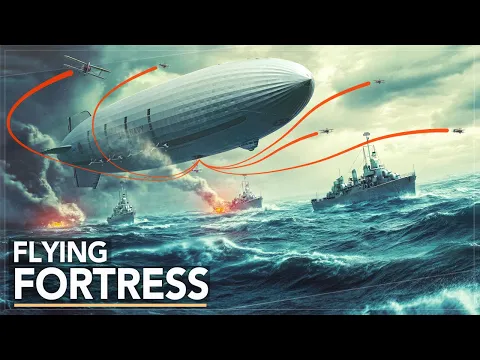
By the early 20th century, Imperial Japan had established itself as the dominant force in Asia. Through ruthless military conquests, the small island nation greatly expanded its borders. The rising imperial power soon set its sights on conquering much of East Asia. By 1921, nearly a third of Japan’s national budget was dedicated to building one of the most powerful navies in the world. In response to Japan and other world powers rapidly expanding their naval strength, the Washington Naval Treaty was signed in 1922 to impose restrictions on the size and number of warships. However, American military planners were not convinced—rightfully so—that Imperial Japan would adhere to these new restrictions for very long. The United States, surrounded by two enormous oceans, seemed increasingly vulnerable. In War Plan Orange (first outlined in 1919 and revised in subsequent years), military planners devised strategies for a possible war with Imperial Japan. Particular attention was given to key targets like the United States' West Coast, Pearl Harbor, and the vital Suez Canal. With millions of square kilometers of open Pacific Ocean, it was

Mustard

Navy Airships Were Insane

21 minTransport & Logistics