Astronomical Catastrophes and the Future of the Universe | Children of the Stars (9/10)
Who watches the sky for any likely threats? We start by visiting the La Sagra Observatory in Spain, in search of near-Earth asteroids. As a protection from astronomical catastrophes, a U.S. businessman builds underground bunkers. Will life be found in other planets? We shall ask children in Bogotá and find out through Spanish astronaut Pedro Duque what life is like in space. We shall also visit the largest Mexican observatory in San Pedro Martir, and get to know the project to build the largest optical telescope in the world, which will be installed in the North of Chile. We shall finish our journey at the Mexican ruins of Bonampak, where father and son will convey to us the importance of guarding the knowledge of our ancestors. ------- Chapters ▷ 0:00 - Intro ▷ 02:16 - Future of the Universe | Children of the Stars (9/10) ▷ 50:56 - Credits ------- ------- Children of the Stars is a voyage through the history of the people of America and their vision of the sky, since the earliest civilizations until the present. In
Related documentaries

From drought-hit rice farms in Thailand to threatened rainforests in Indonesia, this documentary explores the pressures on our food supply. Meet scientists developing heat-resistant vegetables, farmers building sustainable fish ponds and businesses rescuing unwanted produce. Could smarter farming, more diverse crops and less waste help feed a growing planet?
Naked ScienceThe Future of Food: How Will We Feed a Growing Planet?

We move around… always going faster and further. Whether it’s in the air or even in space, research is progressing and giving us the ability to travel. But this traveling has a significant impact on the planet. Indeed, 100,000 plane flights take place each day, which means more than 30 million per year around the world. The impact of air traffic on the environment has doubled in 20 years and air pollution is constantly increasing. At the same time, research is progressing and offering the first journeys into space to individuals. In light of this, could we possibly build airplanes that are less damaging to the environment? What will the planes and rockets of the future look like? How will we get around in the tomorrow’s world? Chapters ▷ 00:00 - Introduction ▷ 02:18 - Electric Planes, Airbus E-Fan ▷ 05:14 - Electric Engines vs. Heat Engines ▷ 08:44 - Green Taxiing System, EGTS ▷ 11:08 - Airplane Noise & Noise Reduction ▷ 14:51 - CFM International LEAP ▷ 18:17 - Scattering the Noise in Amsterdam ▷ 22:00 - Learning
wocomoDOCSFrom Green Airplanes to Space Tourism: How We'll Travel in the Future | Shapers of Tomorrow (1/8)
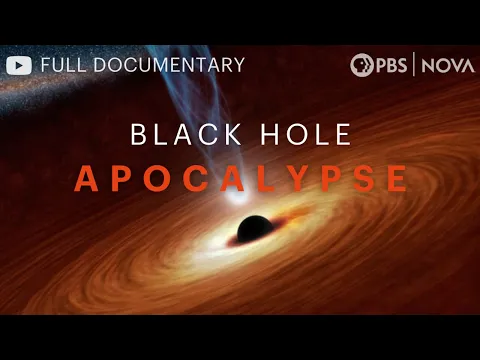
Travel from collapsing stars to galactic centers to understand objects whose gravity traps light and may be essential to the structure of the universe.
NOVA PBS OfficialBlack Hole Apocalypse

In almost every deep image the James Webb Space Telescope takes of the early universe, there are tiny red dots. Astronomers have catalogued hundreds of them, most seen more than 12 billion years ago, and one shines about 100 billion times brighter than a star from a cloud roughly the size of our solar system. The leading explanation is a "black hole star": a young black hole wrapped in gas so thick it glows like the surface of a giant, cool star. If it holds, it may explain how the giant black holes at the centers of galaxies, including our own, were born. This calm, long-form documentary follows the little red dots from the first "universe breaker" galaxies to the clues that broke that reading: missing X-rays, steady light, absent dust and a spectrum that always turns at hydrogen's Balmer limit. It then explores dense-gas Balmer breaks, the Cliff, water vapor in the dots, black hole star one, the Eddington limit and the old quasi-star prediction. It ends with the dispute over black hole masses, the first direct weighing, the
Late ScienceJames Webb's Red Dots Might Be Black Holes Hiding Inside Stars

Hey guys! We’re now live on Spotify 🎧 space,universe,cosmos,planets,nasa,space documentary,sun,national geographic,horrifying planets,spacex,voyager,exoplanets,top 5,ridddle,space facts,voyager 2,top 10,black hole,facts about space,mystery,jupiter,nasa discovery,earth,solar system,astronomy,saturn,mars,facts,strange,dangerous,objects,time The universe is about 13.8 billion years old, yet about eight in ten of its stars have barely started to age. The smallest will shine for more than 10 trillion years, and the largest black holes may last a googol years, a 1 followed by 100 zeros. If dark energy stays constant, the universe never truly ends. It fades, stage by stage, across spans our brains were never built to grasp. That makes our moment rare: we live in the brief, bright opening when stars, planets and the afterglow of the Big Bang can all be seen. This calm, long-form journey starts with why big numbers fool the brain and how scientists count time in zeros. It moves through the brightening Sun and the end of Earth's oceans, the uncertain Milky Way and Andromeda merger, and the dimming of the universe today. It follows red dwarfs burning for trillions of years, the last star ever born, galaxies evaporating, dark
Late ScienceHow Long Will the Universe Last? The Timescales Your Brain Can't Process

Hey guys! We’re now live on Spotify 🎧 space,universe,cosmos,planets,nasa,space documentary,sun,national geographic,horrifying planets,spacex,voyager,exoplanets,top 5,ridddle,space facts,voyager 2,top 10,black hole,facts about space,mystery,jupiter,nasa discovery,earth,solar system,astronomy,saturn,mars,facts,strange,dangerous,objects,time Every picture of our galaxy or the universe seen from above is an illustration, because no camera has ever left the Milky Way. In November 2026, Voyager 1, our farthest spacecraft, reaches one light-day from Earth after nearly 50 years. The galaxy is about 100,000 light-years wide, and at Voyager's speed, rising high enough to see it whole would take almost 2 billion years. We live inside the thing we want to see, and the universe itself has no outside to stand in. Yet astronomers have mapped it anyway, from one small spot, and how they did it shapes everything we believe about our place in space. This documentary follows that journey step by step: the first photo of Earth from space, Voyager's Pale Blue Dot, the scale of the Milky Way, Herschel's star counts and the dust that fooled him, parallax and Leavitt's pulsing stars, Shapley's globular clusters, radio maps of hydrogen, a parallax measured to the far
Late ScienceWhy We Have Never Seen the Universe From Above
About the documentary
Who watches the sky for any likely threats? We start by visiting the La Sagra Observatory in Spain, in search of near-Earth asteroids. As a protection from astronomical catastrophes, a U.S. businessman builds underground bunkers. Will life be found in other planets? We shall ask children in Bogotá and find out through Spanish astronaut Pedro Duque what life is like in space. We shall also visit the largest Mexican observatory in San Pedro Martir, and get to know the project to build the largest optical telescope in the world, which will be installed in the North of Chile. We shall finish our journey at the Mexican ruins of Bonampak, where father and son will convey to us the importance of guarding the knowledge of our ancestors. ------- Chapters ▷ 0:00 - Intro ▷ 02:16 - Future of the Universe | Children of the Stars (9/10) ▷ 50:56 - Credits ------- ------- Children of the Stars is a voyage through the history of the people of America and their vision of the sky, since the earliest civilizations until the present. In
Astronomical Catastrophes and the Future of the Universe | Children of the Stars (9/10) is presented by wocomoDOCS. Its listed runtime is 52 minutes. The source link and publisher attribution are provided with the embedded film.
As a space & universe documentary, Astronomical Catastrophes and the Future of the Universe | Children of the Stars (9/10) uses astronomical, catastrophes, future as its central frame. Space documentaries combine distant observation, physical models and demanding engineering. Notice which measurements support the central idea, how uncertainty is communicated and how instruments limit what can be known.
Viewing context
- What evidence, testimony or observation does the film use to explain astronomical, catastrophes, future?
- Which people, institutions or historical conditions most influence the story told in Astronomical Catastrophes and the Future of the Universe | Children of the Stars (9/10)?
- How does wocomoDOCS' framing affect the documentary's emphasis, and which perspectives may deserve further research?
Topics covered
Film information
- Title
- Astronomical Catastrophes and the Future of the Universe | Children of the Stars (9/10)
- Category
- Space & Universe
- Runtime
- 52 min
- Language
- English
- Publisher
- wocomoDOCS
Watch Free Documentaries provides independent discovery, organization and editorial context. The film remains hosted by its original publisher, who controls availability and playback.