Venus - Earth's hostile sister planet | Children of the Stars (3/10)
In this chapter, we shall travel to Chichen Itzá to find out about the knowledge held by the Mayas about Venus and the temple devoted to it: the Kukulkán. We’ll listen to a rock group, Sak Tzevul who sing about Maya concepts in ancient languages. We shall also visit the ancient Maya city of Uxmal. We then travel to the Achaya Observatory in Santiago de Chile, to take photographs of the conjunction of three planets: Venus, Jupiter and Mercury, and we shall see how the concept of Venus has inspired our arts and influenced the theatre. We shall also visit the Death Valley in California, the hottest environment on Earth, similar to that of Venus. Finally, we shall get to know the Venus Project, an initiative that seems almost like science fiction, whose goal is to re-think the cities for the future. ------- Chapters ▷ 0:00 - Intro ▷ 02:19 - Venus | Children of the Stars (3/10) ▷ 50:00 - Credits ------- ------- Children of the Stars is a voyage through the history of the people of America and
Related documentaries

We move around… always going faster and further. Whether it’s in the air or even in space, research is progressing and giving us the ability to travel. But this traveling has a significant impact on the planet. Indeed, 100,000 plane flights take place each day, which means more than 30 million per year around the world. The impact of air traffic on the environment has doubled in 20 years and air pollution is constantly increasing. At the same time, research is progressing and offering the first journeys into space to individuals. In light of this, could we possibly build airplanes that are less damaging to the environment? What will the planes and rockets of the future look like? How will we get around in the tomorrow’s world? Chapters ▷ 00:00 - Introduction ▷ 02:18 - Electric Planes, Airbus E-Fan ▷ 05:14 - Electric Engines vs. Heat Engines ▷ 08:44 - Green Taxiing System, EGTS ▷ 11:08 - Airplane Noise & Noise Reduction ▷ 14:51 - CFM International LEAP ▷ 18:17 - Scattering the Noise in Amsterdam ▷ 22:00 - Learning
wocomoDOCSFrom Green Airplanes to Space Tourism: How We'll Travel in the Future | Shapers of Tomorrow (1/8)

From drought-hit rice farms in Thailand to threatened rainforests in Indonesia, this documentary explores the pressures on our food supply. Meet scientists developing heat-resistant vegetables, farmers building sustainable fish ponds and businesses rescuing unwanted produce. Could smarter farming, more diverse crops and less waste help feed a growing planet?
Naked ScienceThe Future of Food: How Will We Feed a Growing Planet?

Hey guys! We’re now live on Spotify 🎧 Picture a patch of sky with nothing in it. No stars. No light. Nothing your eye could ever catch. The James Webb Space Telescope aimed at that dark patch and held its gaze for 100 hours straight. What came back rewrote the story of how the universe began. Hidden inside that darkness sat thousands of galaxies, packed into a patch of sky smaller than a grain of sand held at arm's length. One of them formed just 290 million years after the Big Bang. It carries the mass of 500 million suns, and every model built before this image existed said a galaxy like it should be impossible this early. Tonight we walk through that patch of sky. We will meet the galaxy that broke every rule of when galaxies could exist. We will see how light alone lets scientists measure distance across billions of years. And we will watch record after record fall, as the darkness keeps giving up more than anyone expected. Want these stories early and without ads? Scan
Late ScienceJames Webb Just Spent 100 Hours Staring at 'Empty' Space — And It Wasn't Empty at All

Hey guys! We’re now live on Spotify 🎧 You are about to see a planet twice as wide as Jupiter, and it should not be able to exist. Its clouds burn white hot, and its gravity is so weak that gas floats upward like smoke. Scientists have confirmed this giant stretches nearly 190,000 miles across, yet weighs so little that it would float if you built an ocean large enough to hold it. We are about to fly across its burning sky, dive through its shifting cloud layers, and uncover the physics that lets a planet grow this huge without tearing itself apart. First, a quick favor. Scan the QR code on your screen, or press the link in the description below. It takes you straight to our Spotify, where new episodes arrive first and play completely free of ads. Follow along, and you will always hear these stories before anyone else does. Now dim the lights. Prepare yourselves. We begin. Sources
Late ScienceThis Is the Largest Planet We've Ever Found — And Its Scale Is Terrifying

More than fifty years after the Apollo missions, the Moon is once again at the center of space exploration. In January 2019, China achieved a historic first: landing the Chang’e 4 probe on the far side of the Moon. This scientific breakthrough reignited global interest in lunar exploration and marked the beginning of a new space race. Why are the world’s major space powers returning to the Moon? To uncover the history of our Solar System? To search for frozen water hidden in lunar craters? To build future Moon bases, exploit lunar resources, or use the Moon as a stepping stone to Mars and deep space? This documentary investigates the new race to the Moon, from China’s Chang’e missions to NASA’s Artemis program, the Orion spacecraft and the future Gateway lunar station. In France, CNES and IRAP are working with the Chinese space agency CNSA to develop advanced instruments capable of studying the lunar surface and detecting water. In Europe, ESA is contributing to the next generation of exploration vehicles for the Artemis program. Blending science, geopolitics, cutting-edge technology and
wocomoDOCSThe New Race to the Moon: China, NASA and the Future of Space Exploration | Full Documentary
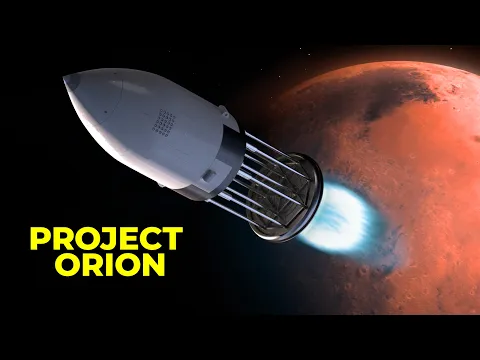
Earth to Mars in 10 Days follows the specific people, circumstances and claims presented in this full-length documentary. Select imagery/video supplied by Getty Images Thank you to AP Archive for access to their archival footage. Thank you to my patreon supporters: Abdullah Alotaibi, Adam Flohr, Henning Basma, Hank Green, William Leu, Tristan Edwards, Ian Dundore, John & Becki Johnston. Nevin Spoljaric, Jason Clark, Thomas Barth, Johnny MacDonald, Stephen Foland, Alfred Holzheu, Abdulrahman Abdulaziz Binghaith, Brent Higgins, Dexter Appleberry, Alex Pavek, Marko Hirsch, Mikkel Johansen, Hibiyi Mori. Viktor Józsa, Ron Hochsprung
Real EngineeringEarth to Mars in 10 Days
About the documentary
In this chapter, we shall travel to Chichen Itzá to find out about the knowledge held by the Mayas about Venus and the temple devoted to it: the Kukulkán. We’ll listen to a rock group, Sak Tzevul who sing about Maya concepts in ancient languages. We shall also visit the ancient Maya city of Uxmal. We then travel to the Achaya Observatory in Santiago de Chile, to take photographs of the conjunction of three planets: Venus, Jupiter and Mercury, and we shall see how the concept of Venus has inspired our arts and influenced the theatre. We shall also visit the Death Valley in California, the hottest environment on Earth, similar to that of Venus. Finally, we shall get to know the Venus Project, an initiative that seems almost like science fiction, whose goal is to re-think the cities for the future. ------- Chapters ▷ 0:00 - Intro ▷ 02:19 - Venus | Children of the Stars (3/10) ▷ 50:00 - Credits ------- ------- Children of the Stars is a voyage through the history of the people of America and
Venus - Earth's hostile sister planet | Children of the Stars (3/10) is presented by wocomoDOCS. Its listed runtime is 51 minutes. The source link and publisher attribution are provided with the embedded film.
As a space & universe documentary, Venus - Earth's hostile sister planet | Children of the Stars (3/10) uses venus, earth, hostile as its central frame. Space documentaries combine distant observation, physical models and demanding engineering. Notice which measurements support the central idea, how uncertainty is communicated and how instruments limit what can be known.
Viewing context
- What evidence, testimony or observation does the film use to explain venus, earth, hostile?
- Which people, institutions or historical conditions most influence the story told in Venus - Earth's hostile sister planet | Children of the Stars (3/10)?
- How does wocomoDOCS' framing affect the documentary's emphasis, and which perspectives may deserve further research?
Topics covered
Film information
- Title
- Venus - Earth's hostile sister planet | Children of the Stars (3/10)
- Category
- Space & Universe
- Runtime
- 51 min
- Language
- English
- Publisher
- wocomoDOCS
Watch Free Documentaries provides independent discovery, organization and editorial context. The film remains hosted by its original publisher, who controls availability and playback.